


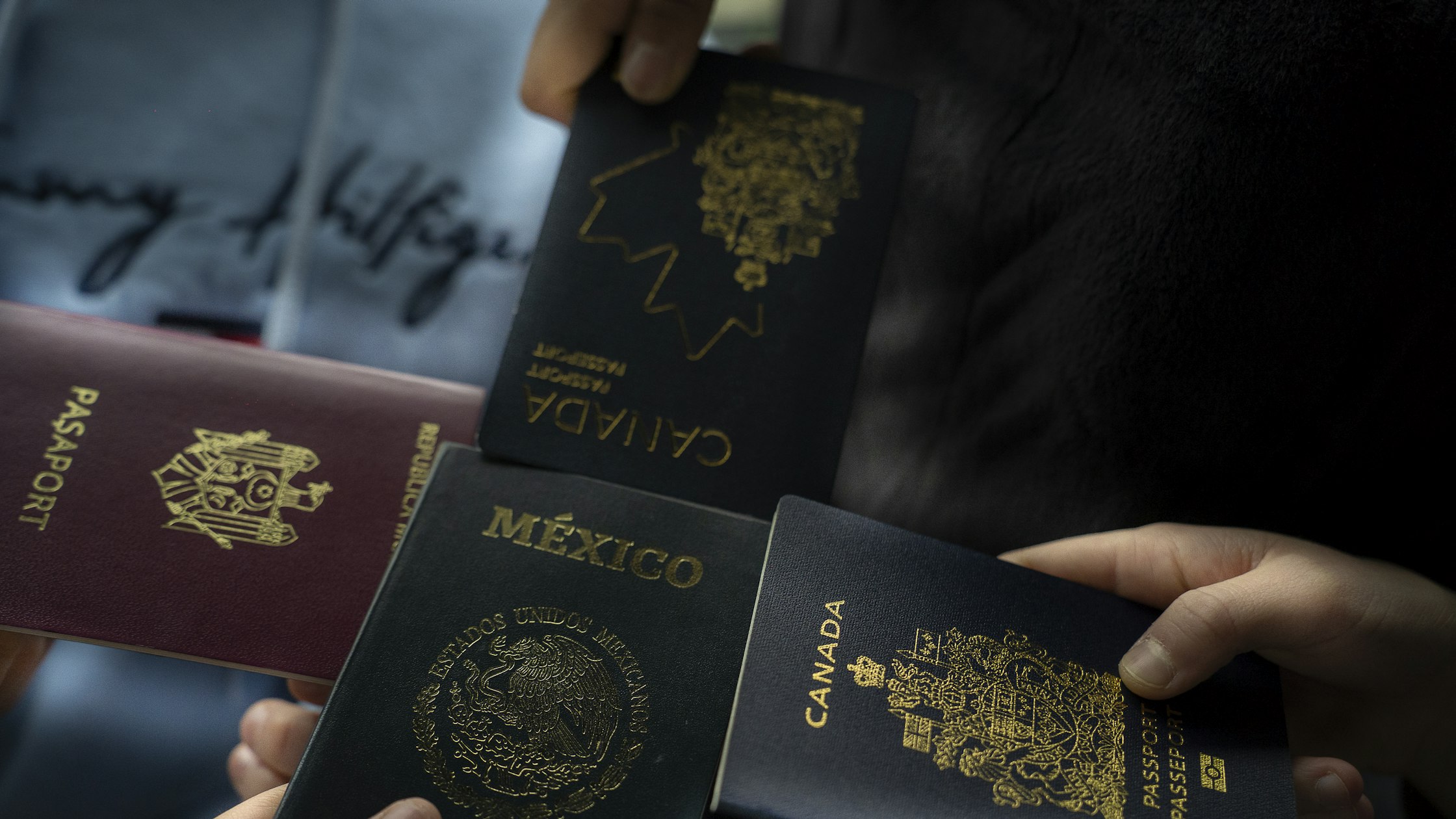
If you're not a U.S. citizen, the first question about beauty school usually isn't "which program?" — it's "can I even get financial aid?" That's a fair question, and most of what's written about it online is vague enough to be useless.
So here's the honest version. Plenty of non-citizens are eligible for FAFSA and federal financial aid — green card holders most of all. Some other groups, including DACA recipients, unfortunately are not. But not qualifying for FAFSA does not mean you can't go to beauty school. Those are two separate questions, and schools blur them together far too often.
The short answer: who can get FAFSA as a non-citizen
- Green card holders (permanent residents): Yes. You file the FAFSA exactly like a U.S. citizen does.
- Refugees, asylees, and certain parolees: Yes, as long as your immigration paperwork shows an eligible status.
- Victims of human trafficking (T visa) and VAWA self-petitioners: Yes.
- DACA recipients: No federal aid — but you can still enroll.
- Student and exchange visas (F-1, F-2, M-1, J-1, J-2): No.
- Undocumented students: No federal aid. Enrollment is still possible.
Who counts as an "eligible noncitizen"
The U.S. Department of Education uses the term eligible noncitizen, and it covers more people than most applicants expect. For the 2026-27 award year, the list includes:
- U.S. nationals, including natives of American Samoa and Swains Island
- Lawful permanent residents holding Form I-551, I-151, or I-551C — the green card
- Conditional permanent residents, and people granted cancellation of removal or suspension of deportation
- Refugees and people granted asylum, shown on Form I-94
- Parolees paroled into the U.S. for at least one year, plus specific Afghan and Ukrainian parolee groups admitted during designated windows
- Cuban-Haitian entrants
- Conditional entrants admitted before April 1, 1980
- T visa holders — victims of severe forms of human trafficking — and their qualifying family members
- Battered or abused spouses and children with an approved or prima facie VAWA self-petition
- American Indians born in Canada under the Jay Treaty
- Citizens of the Marshall Islands, Micronesia, and Palau, who qualify for Pell Grants, FSEOG, and Federal Work-Study — but not federal student loans
If you're in one of those categories, you are not applying for some lesser version of financial aid. You're applying for the same Pell Grant and Direct Loan programs everyone uses. The maximum Pell Grant for 2026-27 is $7,395, and it isn't a loan — you don't pay it back.
Green card holders: what you actually need
This is the most common situation we see at Beyond, and it's the most straightforward one. As a lawful permanent resident, you file the FAFSA with your Social Security number, and you'll enter your Alien Registration Number — the eight- or nine-digit A-Number printed on your green card. The Department of Education runs an automatic match with the Department of Homeland Security to confirm your status.
Two things to know before you file:
- Name spelling matters. The name on your FAFSA has to match your Social Security card and your immigration documents exactly. A mismatched middle name or a hyphen is the single most common reason a match fails and a student gets stuck submitting paperwork for weeks.
- Citizenship isn't the only requirement. You still need a high school diploma or GED, and you still need to enroll in an eligible program. Our cosmetology and esthetician programs qualify for federal aid; our 400-hour manicuring program generally does not, because it falls below the federal hour threshold.
Beyond's FAFSA school code is 041482. If you want a walkthrough of the form itself, read our three tips for completing the FAFSA for beauty school.
DACA recipients: not eligible for FAFSA, still eligible to enroll
Let's be direct, because this deserves a straight answer. DACA recipients are not eligible for federal student aid. The Federal Student Aid Handbook states it plainly: students granted DACA are often assigned a Social Security number, and they are not eligible for Title IV aid. Having an SSN and a work permit does not change that. The same is true for Temporary Protected Status — TPS alone is not one of the eligible noncitizen categories.
What that rule does not do is stop you from going to beauty school. DACA recipients enroll at Beyond, complete their hours, sit for the California state board exam, and get licensed. The California Board of Barbering and Cosmetology does not require U.S. citizenship to hold a cosmetology, esthetician, or manicuring license — it requires that you're at least 17, have a 10th-grade education or equivalent, and complete the required training hours.
The barrier is funding, not eligibility. And that's a problem with a real solution.
How students without federal aid pay for Beyond
We offer private payment plans but it's also worth checking private scholarships. Many beauty industry scholarships have no citizenship requirement at all, and many people don't even apply.
If you attended a California public school, also check CalKIDS — the state may have already deposited $500 to $1,500 in a savings account in your name, and you don't need a Social Security number to claim it or use it. CalKIDS funds work at Beyond, including for the manicuring program that federal aid can't cover.
- Manicuring — $5,595, 400 hours. Evenings only, Tuesday through Thursday 6-10 PM plus Saturdays, about five months. This is the most common path for students paying out of pocket, and it comes with Aprés Gel-X certification built into the curriculum. Since it isn't federally funded anyway, non-citizen and citizen students are on identical footing here.
- Esthetician — $11,206.50, 600 hours. Day or night. The evening track exists specifically so people can keep working while they train.
- Cosmetology — $17,560, 1,000 hours. Daytime only, about seven months full-time. The broadest license in California — hair, color, chemical services, skin, and nails.
- Payment plans. We set up plans for students who don't qualify for federal aid. Call and ask what the monthly number would actually look like for the program you want before you assume it's out of reach.
Common questions
Can I file the FAFSA if my parents are undocumented?
Yes. If you're a U.S. citizen or an eligible noncitizen, your own status is what determines your eligibility. Your parents' status doesn't disqualify you. Contributors without a Social Security number can still create a StudentAid.gov account and complete their section of the form.
Does a work permit make me eligible for FAFSA?
No. Employment authorization and a Social Security number are not the same thing as an eligible immigration status. The DHS match looks at your status, not your ability to work.
Do I need to be a citizen to get a California beauty license?
No. California licenses cosmetologists, estheticians, and manicurists based on training hours and exam results, not citizenship. Reach out to discuss your specific situation.
What if my status changes while I'm enrolled?
Tell our admissions office. If you become a lawful permanent resident partway through your program, you may become eligible for federal aid for your remaining terms.
Not sure where you land? Ask us.
Bring your documents and we'll tell you honestly which programs you qualify for aid on and what the rest would cost. No pressure, no guessing.
- Call (562) 404-6193 and ask for admissions
- Book a campus tour at 13640 Imperial Highway, Suites 6-8, Santa Fe Springs, CA 90670
- Check the official eligibility rules yourself at StudentAid.gov


