


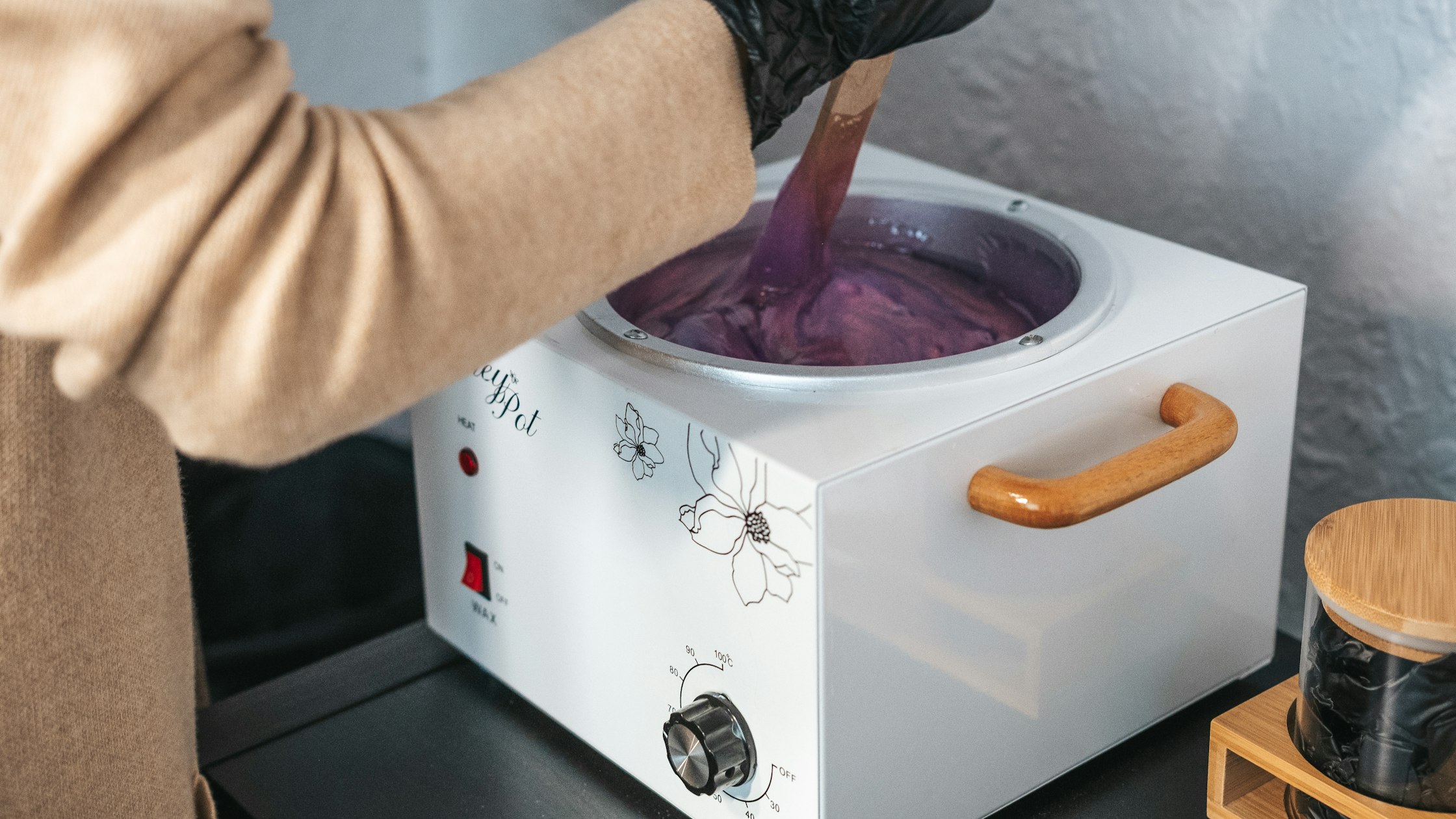

Sugaring is the hair removal method everyone's "crunchy" friend swears is gentler than waxing — and for once, the internet wisdom is mostly right, with caveats. Both methods remove hair from the root and keep you smooth for weeks. The differences are in technique, sensation, skin impact, and which body areas each handles best. Here's the honest sugaring vs. waxing comparison, from a school that teaches professional hair removal.
What is sugaring?
Sugaring uses a paste of exactly three ingredients — sugar, lemon juice, water — warmed to body temperature. The esthetician molds the paste onto the skin against the direction of hair growth, then flicks it off with the direction of growth. That with-the-grain removal is the technical heart of the method: hair comes out the way it naturally points, which means less breakage at the surface and less follicle trauma. The same ball of paste is molded and flicked repeatedly across the area. It's an ancient technique (Middle Eastern and North African beauty traditions were sugaring centuries before LA studios charged for it) that holds up because the mechanics are sound.
What is waxing?
Waxing applies warm soft wax (removed with cloth strips) or hard wax (which sets and is removed by itself) in the direction of hair growth, then pulls it off in the opposite direction. Against-the-grain removal is fast and thorough — wax grabs everything, including the finest vellus hair — but it's also the source of waxing's two complaints: a sharper sting and more surface-level hair breakage, which can mean earlier regrowth and more ingrowns for some people.
Sugaring vs. waxing: the real differences
- Pain: Both hurt — anyone promising painless root removal is lying. Sugaring usually rates lower because paste sticks to hair, not (much) to live skin, and removal follows growth. Waxing exfoliates skin along with hair, which intensifies the sting.
- Skin sensitivity: Sugaring is room-to-body temperature (no burn risk) and hypoallergenic-simple in ingredients — the gentler pick for sensitive, reactive skin. Wax runs hotter and may include resins and fragrances.
- Ingrown hairs: Sugaring's with-the-grain removal tends to produce fewer broken hairs, and fewer broken hairs means fewer ingrowns. People who get bumps after every wax often switch to sugaring for this reason alone.
- Hair length needed: Sugaring can grab slightly shorter regrowth (about 1/8 inch vs. 1/4 inch for wax) — shorter awkward grow-out phase.
- Speed and thoroughness: Waxing wins on large areas (legs, arms, back) — strips clear big zones fast. Sugaring is more methodical and can take longer.
- Results timeline: Equivalent — both keep you smooth roughly 3 to 5 weeks, thinning over time with consistent appointments.
Choose sugaring if... choose waxing if...
- Choose sugaring if: you have sensitive skin or eczema-prone areas, you battle ingrowns, you prefer simple ingredients, or you're booking delicate areas (bikini, underarms, face).
- Choose waxing if: you want speed on big areas, you need every fine hair gone (brows, full legs), or sugaring isn't available near you — professional sugaring is a specialized hand skill and not every salon offers it.
- Either way: exfoliate gently between appointments, moisturize daily, skip heat and tight clothing for 24 hours after, and keep a consistent 4–5 week schedule for the best long-term results.
What do they cost?
In the LA area, expect $20 to $35 for brows, $60 to $90+ for a Brazilian, with sugaring typically a few dollars above waxing for the same area, reflecting the technique time. At the Beyond Salon in Santa Fe Springs — the supervised student clinic inside our beauty academy — waxing services are performed by esthetician students under licensed instructors at student-clinic prices. Call (562) 404-6193 to ask what hair-removal services (including sugaring availability) are on the current student menu.
The professional side
Hair removal is a core unit of the 600-hour esthetician program at Beyond 21st Century Beauty Academy — skin prep, wax chemistry, technique, sanitation, and contraindications, practiced under licensed instructors before students ever serve the public. Waxing specialists build some of the most loyal client books in the industry (smoothness is a recurring subscription). If that business appeals to you, here's how to become a waxer in California — or compare the two license paths in our esthetician vs. cosmetologist guide, then come tour the school.
Related reading
How to become a waxer in California · Who's licensed for brow lamination in California · Lash lift and tint, explained


