


If you've been researching skin care careers, you've probably run into the word esthiology and wondered whether it's something different from esthetics, or a typo, or a fancier program you're supposed to look for instead. The honest answer is simpler than the spelling makes it look, and it matters if you're comparing schools, because different schools use different words for the exact same training.
The short answer: esthiology is the study of skin care
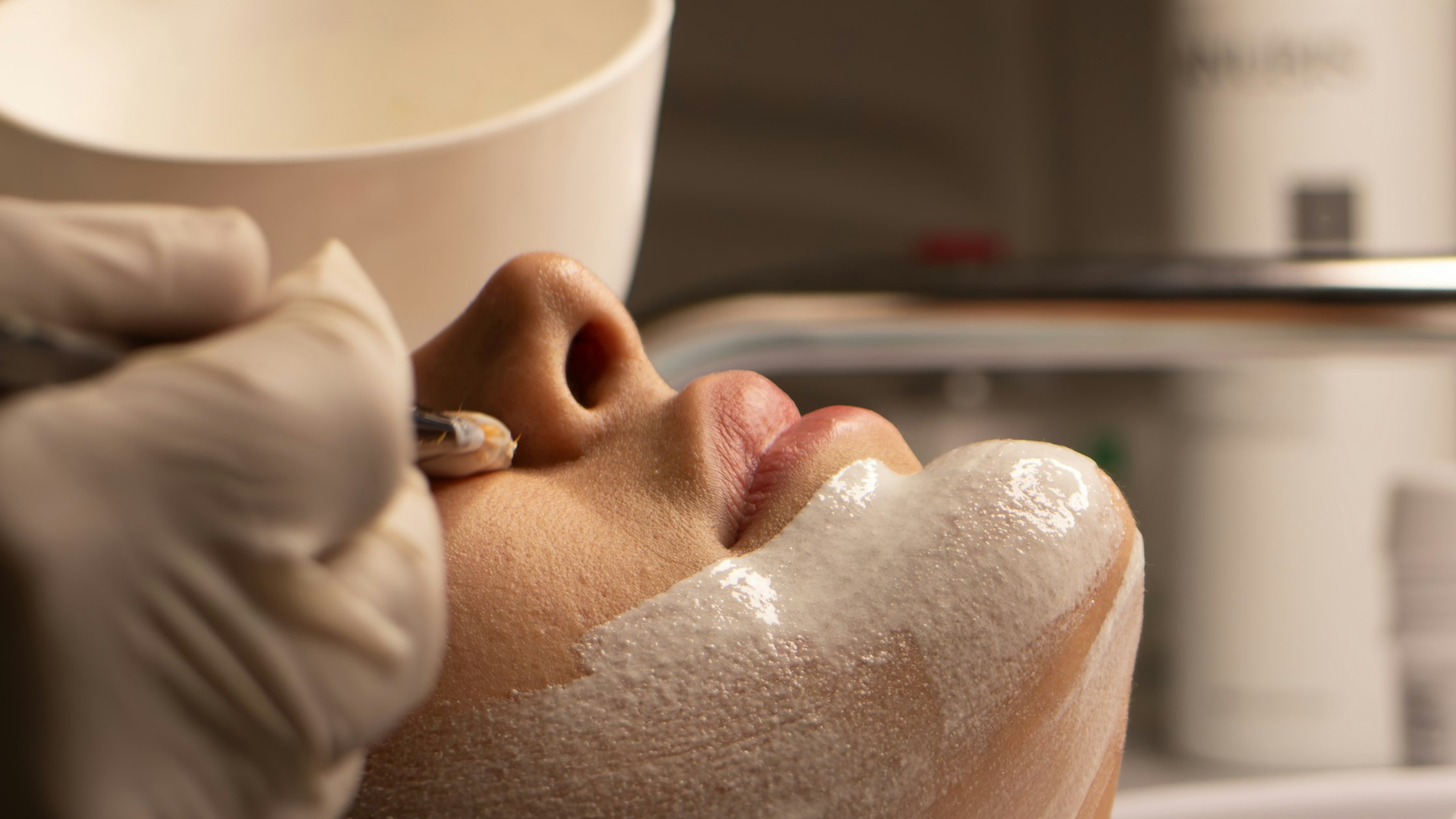
Esthiology is the formal name for the study and practice of professional skin care. A person who practices it is an esthetician. So when a school says it offers an "esthiology program," a "skin care program," or an "esthetician program," those are the same thing: the licensed training that qualifies you to perform facials, waxing, chemical exfoliation, and other skin treatments on paying clients.
The word comes from the Greek aisthetikos, meaning perception or appreciation of beauty — the same root as "aesthetics." Esthiology just adds the "-ology" ending that signals a field of study, the way biology is the study of life.
Esthiology vs. esthetics vs. aesthetics — what's the difference?
In practice, almost nothing. Here's how the terms actually get used:
- Esthiology — the field of study. Some schools use it in program names to sound more academic.
- Esthetics — the practice itself. This is the word the California Board of Barbering and Cosmetology uses, and the license you earn is an esthetician license.
- Aesthetics / aesthetician — the British-influenced spelling of the same words. In the US, "aesthetician" sometimes signals medical settings (medspas, dermatology offices), but there is no separate "aesthetician license" in California. It's one license either way.
The takeaway: don't pay extra or hunt for a special school because a program is labeled "esthiology." What matters is that the school is state-approved and prepares you for the California esthetician license.
What does an esthiology program cover?
In California, esthetician training is a 600-hour program regulated by the State Board. At Beyond, that curriculum — built on Dermalogica products and protocols — covers:
- Skin analysis and facials — understanding skin types and conditions, then treating them with cleansing, exfoliation, extractions, masks, and massage
- Chemical exfoliation — the peels and enzyme treatments allowed within the esthetician scope
- Hair removal — waxing and tweezing for face and body
- Makeup application
- Machine-based treatments — high frequency, steamers, and other electrical modalities
- Sanitation, safety, and California law — a large share of the written exam
You also spend a big portion of your hours doing hands-on work on real clients in the student clinic, which is where the training actually sticks. If you want the full legal picture of what estheticians can and can't do, we broke it down in our esthetician scope of practice guide.
How do you become a licensed esthetician in California?
The path is the same regardless of what the program is called:
- Complete 600 hours at a state-approved school
- Pass the California State Board written exam
- Receive your esthetician license
Full-time students at Beyond finish the 600 hours in about 5 months; part-time day and evening students finish in about 7.5 months. Esthetician is the one program at Beyond with both day and night schedules, which matters if you're working while you train. We covered the timeline in detail in how long esthetician school takes in California, and the full step-by-step in our guide to becoming an esthetician in California.
What does esthiology training cost?
At Beyond, the esthetician program is $11,206.50 including your student kit. We publish that number because you shouldn't have to sit through a sales pitch to find out what school costs. The program is also eligible for federal financial aid — FAFSA and Pell Grants for students who qualify — which can cover a meaningful part of tuition. Details are on our financial aid page.
Careers after an esthiology program
Licensed estheticians work in day spas, salons, medspas and dermatology offices (under appropriate supervision), hotels and resorts, and increasingly for themselves in rented suites. The Bureau of Labor Statistics projects faster-than-average growth for skincare specialists, and Southern California is one of the densest markets in the country for spa and skin care work.
Who esthiology training fits
- You're drawn to skin care specifically — not hair or nails — and want to specialize from day one
- You want a shorter, cheaper path than cosmetology (600 hours vs. 1,000)
- You're working or parenting and need an evening schedule option
- You like close, one-on-one client work in a calm setting
If you want the broadest license that includes skin plus hair and nails, look at our cosmetology program instead.
Study esthiology at Beyond in Santa Fe Springs
Beyond 21st Century Beauty Academy has trained estheticians since 1997, with 2,100+ licensed graduates across our programs. Our esthetician program runs day and evening tracks with new cohorts starting almost every month.
The best way to know if it fits is to see it. Schedule a tour, or call us at (562) 404-6193. We're at 13640 Imperial Highway, Suites 6-8, Santa Fe Springs — an easy drive from Downey, Norwalk, Whittier, and most of southeast LA County.
Want to see what the State Board exam feels like? Try our free esthetician practice exam.


