


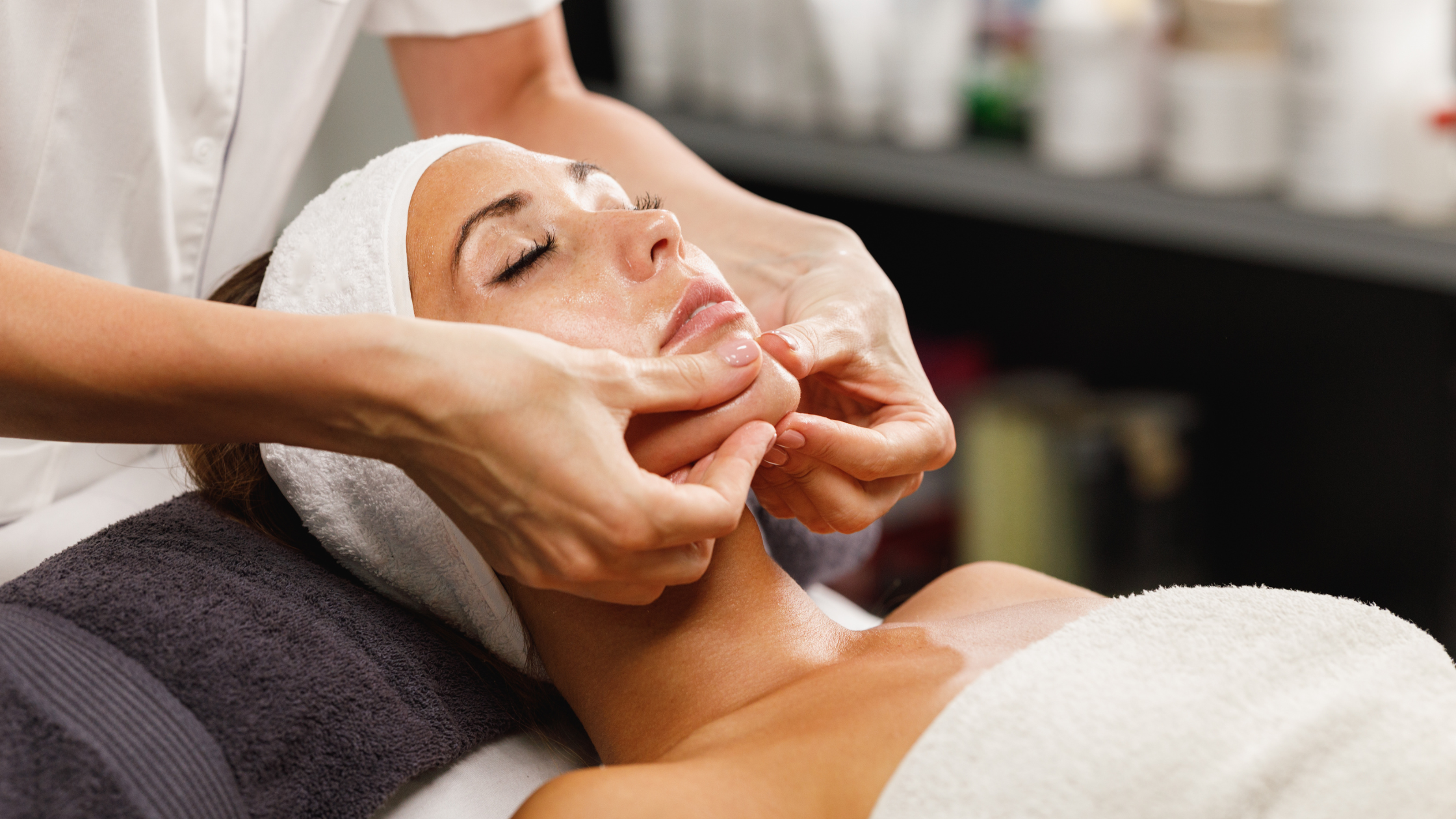
If you're searching for how to become an esthetician in California, you probably already know you're interested in skincare — you just need someone to lay out the actual steps without the runaround. Maybe you've been watching skincare content for months. Maybe you're working a job you've outgrown and want a career where you use your hands and help people feel good about themselves. Maybe a friend or family member told you about the field and it stuck.
Whatever brought you here, this guide covers every step from start to finish: what California requires, how to pick a school, what the state board exam looks like, what it costs, and what comes after. No filler, no fluff — just the information you need to make a decision.
The Short Answer
To become a licensed esthetician in California, you need to:
- Complete 600 hours of training at a state-approved esthetician school
- Apply for your test through the California Department of Consumer Affairs (DCA) BreEZe website
- Pass the California State Board written exam
The whole process typically takes 5 to 12 months depending on whether you attend school full-time or part-time. Once you're licensed, you can work anywhere in California — spas, dermatology offices, salons, resorts, or on your own.
Step 1: Meet the Basic Requirements
California's esthetician requirements start simple. According to the California Board of Barbering and Cosmetology, you must:
- Be at least 17 years old (by the time you take your State Board test)
- Have completed the 10th grade (or its equivalent)
There's no college degree required. You don't need prior work experience. You don't need a high school diploma — just 10th-grade completion. That low barrier is intentional: the state wants the licensing path to be accessible. The real training happens during your 600 hours of esthetician school.
Step 2: Choose a State-Approved Esthetician School
This is the biggest decision you'll make in the process, so it's worth being deliberate. California requires your training hours to come from a school approved by the BBC. Not every school offers an approved program. Be wary of "certificate" programs that don't lead to a license.
Here's what to look for when comparing programs:
Accreditation
Accreditation is optional but one thing many students look for. More practically, accreditation is required for a school to accept federal financial aid — meaning you can use FAFSA to help pay for your training for those who qualify. If a school isn't accredited, you likely won't qualify for Pell Grants or federal student loans there.
Curriculum and Products
All California esthetician programs must cover the same BBC-mandated subjects: facials, skin analysis, hair removal, makeup application, sanitation, health and safety, and California law. But how schools teach those subjects varies a lot. Ask what product lines the school uses in training. Professional-grade products from brands that spas and clinics actually use will serve you better than generic supplies. At Beyond 21st Century Beauty Academy, for example, the esthetician curriculum is built on Dermalogica products and protocols — the same brand used by thousands of professional skin therapists worldwide.
Schedule
Not every school offers flexibility here. Some programs only run during the day, which doesn't work if you have a job or family responsibilities during those hours. Beyond is the rare school in the LA/Orange County area that offers both day and evening esthetician tracks: daytime classes run Tuesday through Saturday, and evening classes meet three weeknights plus Saturday. If schedule is a deciding factor for you, ask every school you're considering about their exact class hours before you commit.
Location and Clinical Experience
You'll spend hundreds of hours at your school, so proximity matters — especially if you're commuting after work. Also ask about hands-on clinical experience. This is where you build the muscle memory and client-interaction skills you'll use every day as a licensed esthetician.
Step 3: Complete Your 600 Hours
California's esthetician school requirements include 600 clock hours of training. During those hours, your coursework will cover:
- Facials and skin care — cleansing, exfoliation, extraction, masks, massage techniques
- Skin analysis — identifying skin types, conditions, and contraindications
- Hair removal — waxing techniques for face and body
- Makeup application — corrective and enhancing techniques
- Sanitation and safety — disinfection, sterilization, Cal/OSHA standards
- California law — the BBC regulations you'll need to know for your license and your career
How long 600 hours takes depends on your schedule. In a full-time day program, you can finish in roughly 5 months. In an evening or part-time program, expect closer to 7 to 9 months. Neither option is better or worse — it comes down to what your life allows right now. For a schedule-by-schedule breakdown of how long each track takes, see our guide on how long esthetician school takes in California.
Step 4: Pass the California State Board Exam:
A multiple-choice test covering the theory you learned in school — skin anatomy and physiology, disorders and diseases, sanitation, safety, and California law. The exam is administered by PSI (the BBC's testing vendor) at testing centers throughout California.
Step 5: Get Your California Esthetician License
Once you pass both exams, the BBC processes your California esthetician license. You'll need to submit:
- Your exam results (forwarded by PSI)
- Proof of completed training hours from your school
- A license application and fee
Processing times vary, but most applicants receive their license within a few weeks. Once it arrives, you're legally authorized to practice as an esthetician anywhere in California.
Step 6: Start Your Career
This is the part that makes the whole process worth it. Licensed estheticians in California work in a wide range of settings:
- Day spas and medical spas — the most common starting point, with steady clientele and structured schedules
- Dermatology and plastic surgery offices — clinical esthetics, often with higher pay
- Resorts and hotels — luxury spa services in hospitality settings
- Salons — offering skincare services alongside hair and nail professionals
- Freelance and mobile esthetics — building your own book of business
According to the U.S. Bureau of Labor Statistics, skincare specialists nationally earned a median wage of $41,560 per year ($19.98 per hour) as of May 2024. Wages can vary highly depending on experience and the individual. Employment in the field is projected to grow 7% from 2024 to 2034 — much faster than the average for all occupations — with roughly 14,500 job openings projected each year. In a metro area like Los Angeles and Orange County, demand tends to run even higher than the national average.
Your earning potential goes up as you specialize. Many estheticians pursue advanced training in areas like chemical peels, dermaplaning, waxing, brow or lash services, and oncology esthetics. The license is your starting line, not your ceiling.
What Does Esthetician School Cost?
Let's talk numbers, because this is often the question people are most nervous to ask.
At Beyond 21st Century Beauty Academy, total tuition for the 600-hour esthetician program is $11,206.50. That includes tuition, fees, and a kit with the professional-grade products and tools you'll use in class and can keep after graduation.
Beyond is FAFSA eligible (school code 041482), which means you may qualify for Pell Grants or federal student loans that can significantly reduce your out-of-pocket cost or change payment options. Many students at Beyond pay substantially less than full tuition after financial aid is applied.
To understand your personal cost, the simplest step is to fill out the FAFSA — it's free, it takes about 30 minutes, and it tells you exactly what you qualify for. Beyond's financial aid team walks every student through this process.
Common Questions
How long does it take to become an esthetician in California?
Most students complete their 600 training hours in 5 to 9 months, depending on whether they attend full-time or part-time. Add a few weeks for state board testing and license processing, and you can realistically be working as a licensed esthetician within 6 to 10 months of starting school.
What's the difference between an esthetician and an aesthetician?
Short answer: it's the same profession. "Esthetician" is the standard spelling in California licensing. "Aesthetician" is an alternate spelling sometimes used to describe someone who focuses on medical or clinical skincare. Your California license says "esthetician" regardless. For a deeper dive, read our post on esthetician vs. aesthetician.
Do I need an esthetician license to do lash extensions in California?
Yes. In California, applying eyelash extensions requires a current cosmetology or esthetician license. There's no separate "lash tech" license in this state. We covered this in detail in our post on esthetician licensing for lash extensions.
Do I need a license to do waxing in California?
Yes — and there's no waxing-only license. Because waxing is an esthetic service, you need an esthetician or cosmetology license to perform it legally. Our guide on how to become a waxer in California lays out the fastest path.
What's the difference between an esthetician and a cosmetologist?
Estheticians specialize in skincare. Cosmetologists have a broader license that covers hair, nails, and skin. If skincare is your focus, the esthetician path is shorter (600 hours vs. 1,000 for cosmetology) and more specialized. We break down the full comparison in our esthetician vs. cosmetologist guide.
Can I work while attending esthetician school?
Many students do. That's exactly why evening programs exist. Beyond's evening esthetician track holds classes Tuesday, Wednesday, and Thursday from 6:00 to 10:00 PM plus Saturday 8:30 AM to 5:00 PM — a schedule built for people who work during the day.
Is financial aid available for esthetician school?
At NACCAS-accredited schools like Beyond, yes. You may qualify for federal Pell Grants (which don't need to be repaid), federal student loans, and other aid. The first step is completing the FAFSA.
Ready to Get Started?
If you've read this far, you're not just casually curious — you're seriously considering this. Here's your next move:
Tour the school. Seeing the clinic, meeting instructors, and asking questions in person will tell you more in 30 minutes than any website can. Schedule a tour of Beyond 21st Century Beauty Academy at 13640 Imperial Highway, Santa Fe Springs, CA 90670, or call us at (562) 404-6193.
Not sure if you're ready to enroll? Try our free esthetician state board practice exam — it covers the same subjects you'd study in school, and it's open to everyone.
We've been training estheticians, cosmetologists, and nail technicians since 1997 — more than 2,100 graduates and counting. Day classes, evening classes, Dermalogica-based curriculum, FAFSA-eligible tuition, and a student clinic. That's the whole pitch. Come see it for yourself.


